
Also read: Top 5 AI Social Media Scheduling Tools for 2026
Introduction: From Creator to System Builder
There was a time when uploading a YouTube video meant hours of manual work: writing scripts, recording, editing, and manual promotion. In 2026, the most successful creators are no longer just “content creators.” They are System Builders.
And at the center of these systems are AI Agents—autonomous, intelligent workflows that can handle your entire YouTube pipeline. This guide will show you exactly how to automate YouTube uploads using AI agents, step-by-step, with deep strategy, real workflows, and scalable systems.
Chapter 1: What Are AI Agents (And Why They Matter)
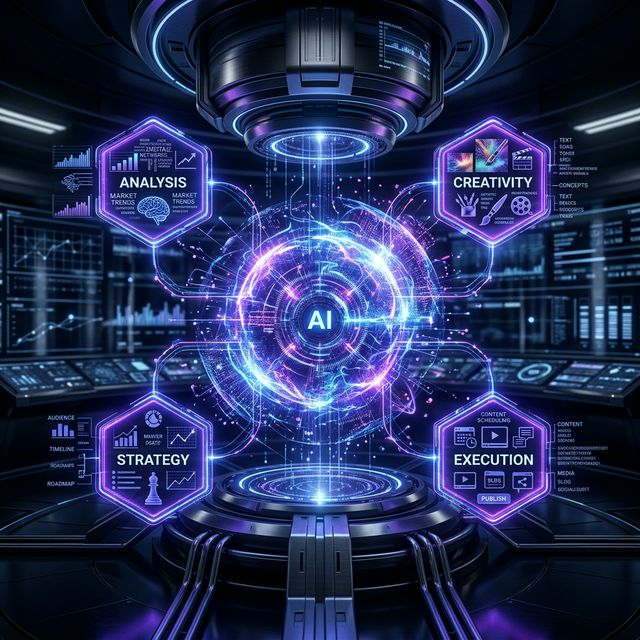
AI Agents are not just tools; they are decision-makers and task executors. Unlike traditional tools which need constant input, AI agents can take a goal like “Grow my YouTube channel,” break it into tasks, and execute them automatically.
| Task | Manual Creator | AI Agent System | Description |
|---|---|---|---|
| Idea | Brainstorming for hours | Auto-generated via Trend API | AI agents analyze 1000s of data points to find viral topics in seconds. |
| Script | Manual Writing | Agentic Multi-Step Scripting | Multi-agent workflows build structured, highly-engaging scripts. |
| Editing | Manual Cutting/FX | Automated via Vision AI | AI identifies scenes, tracks motion, and adding subtitles automatically. |
| Upload | Manual Setup | Zero-Click Automation | API-based agents handle metadata, timestamps, and scheduling. |
Chapter 2: The Fully Automated YouTube Pipeline
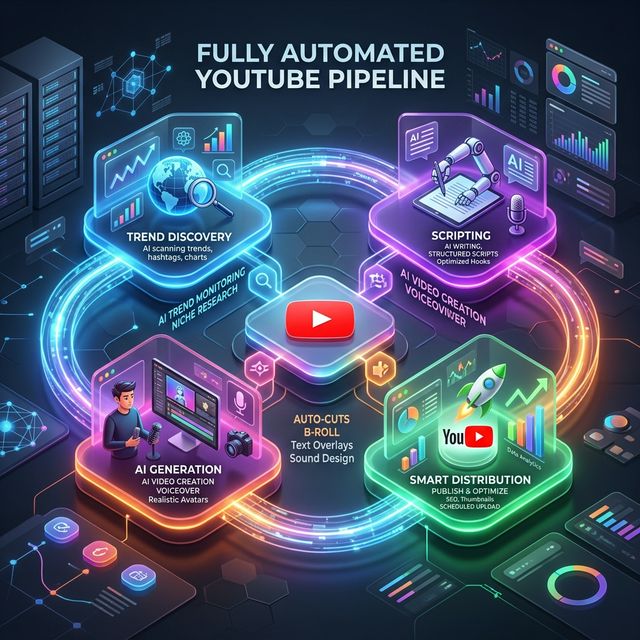
To automate YouTube, you need to understand the entire pipeline as a unified system rather than disjointed tasks. Here is the visual flow of an elite 2026 automation engine:
↓
[AI Voice/Video Gen] ← [AI Editor] ← [Thumbnail Gen]
↓
[Auto Upload Agent] → [Uploadkar Distribution] → [Growth]
Chapter 3: Step-by-Step AI Automation Setup
Now let’s dive into the specifics of building each component of your content machine.
Step 1: Automating Video Ideas
Most creators waste time thinking: “What should I post?” Elite teams use AI agents to scan global trends and analyze competitors to find high-probability viral topics. For example, you can set up a script that pulls trending topics daily and filters them based on your specific channel engagement scores.
Step 2: AI Script Writing System
Writing scripts is slow and inconsistent. Using a structured framework (Hook → Problem → Curiosity Gap → Value → CTA), you can instruct an AI agent to build retention-optimized scripts. Train your agent on your specific tone so it feels personal, not robotic.
Step 3: AI Voice & Video Creation
In 2026, you have two core paths. For a Faceless Channel, you use high-end AI voice generators and cinematic stock visuals. For a Personal Brand, you use AI to enhance your recorded content, handle b-roll injection, and sync graphics to your speech automatically.
Step 4: AI Video Editing Automation
Editing is where most creators quit. AI editors now handle 90% of the busy work: silence removal, subtitle generation, scene transitions, and visual weighting. What once took a day now takes minutes of rendering time.
Step 5: AI Thumbnail Generation
No click = no views. Use AI to generate 50+ thumbnail variations based on current "CTR Psychology" data. The formula is simple: Emotion + Curiosity + Contrast. AI agents can test these variations against simulated audience eye-tracking before you ever upload.
Step 6: Automating YouTube Uploads
This is the core execution layer. AI agents can use the YouTube API to upload videos, generate optimized titles, write rich descriptions with timestamps, and add semantic tags automatically. This is a "Zero-Touch" workflow.

Step 7: The Most Important Step — Distribution
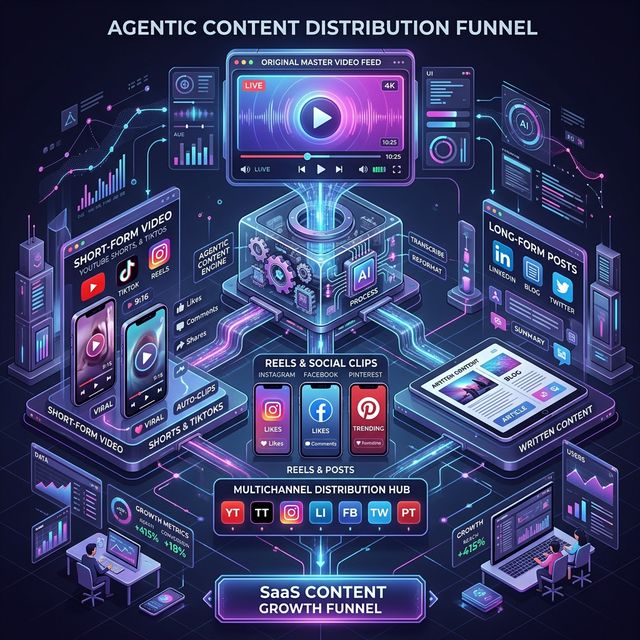
Uploading is NOT enough. Growth happens after the upload. This is where Uploadkar serves as the final, most critical agent in your system. It takes your master video and repurposes it into 20+ pieces of cross-platform content (Shorts, Reels, LinkedIn posts) to drive traffic back to your main channel.
Chapter 4: Building Your AI Agent System (Advanced)
A true system builder creates a Feedback Loop. The system shouldn't just upload—it should learn. By analyzing the data from your previous automated uploads, the AI Agent improves its own script writing and idea generation for the next cycle.
The Growth Secret: One Video to Ten Platforms
Don't let your content die on one platform. Use Uploadkar to turn 1 YouTube video into a multi-platform funnel. Traffic from TikTok and Instagram feeds your YouTube algorithm, causing your main videos to go viral faster.
Chapter 5: Real Benefits of AI Automation
- Time Freedom: You manage the system, you don't do the labor.
- Consistency: AI doesn't get tired or miss an upload schedule.
- Scale: Manage 10 channels with the effort it used to take for one.
Chapter 6: Common Mistakes to Avoid
Avoid "Over-Automation" without human strategy. AI is the engine, but you are the driver. Never ignore distribution; a video that stays on a single platform is a wasted asset. Always strive for high-quality inputs (prompts) to ensure the AI doesn't produce generic content.
Chapter 7: The Future of YouTube Automation
The creator economy is splitting into two worlds: Manual creators who grow slowly, and System Creators who grow exponentially. The winners of 2026 will be those who spend their time building better machines, not better individual frames.
Chapter 8: Your Action Plan
Start today by automating your idea generation. Next, move into AI-assisted scripts. Finally, implement a distribution engine like Uploadkar to ensure every video you create reaches its maximum audience potential.
Conclusion: Build Once, Grow Forever
Stop thinking like a creator and start thinking like a system builder. AI agents allow you to automate work and scale content at a level that was impossible just years ago. The future of YouTube belongs to the most systemized minds.