Why Posting Time Still Matters in 2026
If you’re posting great content but still not getting views… Your timing might be the problem.
In 2026, social media is more competitive than ever. Even great content can fail if it’s posted at the wrong time. Algorithms rely heavily on early engagement signals. When you post, your content is shown to a small audience; their reaction determines its ultimate reach. If you post when your audience is inactive, you get no engagement, and the algorithm marks the post as "dead."
The Psychology Behind Engagement Timing
People don’t randomly scroll. They follow patterns based on their daily routines:
- Morning (7–9 AM): Quick scrolling during commutes or breakfast.
- Afternoon (12–2 PM): Break-time consumption while resting from work or school.
- Evening (7–10 PM): Peak engagement when people are relaxing at home.
Best Time to Post on YouTube
Recommended Times:
- Weekdays: 3 PM – 6 PM
- Weekends: 9 AM – 12 PM
YouTube needs time to process and index content. Posting slightly before peak hours helps the platform distribute it effectively by the time the main audience logs on.
Best Time to Post on Instagram (Reels & Posts)
Instagram Reels perform significantly better during evening scroll sessions. For standard posts, morning windows are ideal.
- Morning Window: 8 AM – 10 AM
- Evening Window: 6 PM – 9 PM
Best Time to Post on LinkedIn
LinkedIn remains a professional ecosystem. Engagement peaks during working hours when professionals are active for networking and industry updates.
Primary Window: Weekdays, 8 AM – 11 AM.
Best Time to Post on Twitter/X
X is a fast-moving, news-driven platform. Frequency is key here, but timing still helps catch the waves.
- Morning: 7 AM – 9 AM
- Evening: 6 PM – 8 PM
Data-Backed Timing Insights
General engagement trends show a distinct "Double Peak" pattern in 2026:
| Segment | Behavior |
|---|---|
| Morning spike | Information gathering & updates |
| Afternoon dip | High productivity, low scrolling |
| Evening peak | Relaxed browsing & entertainment |
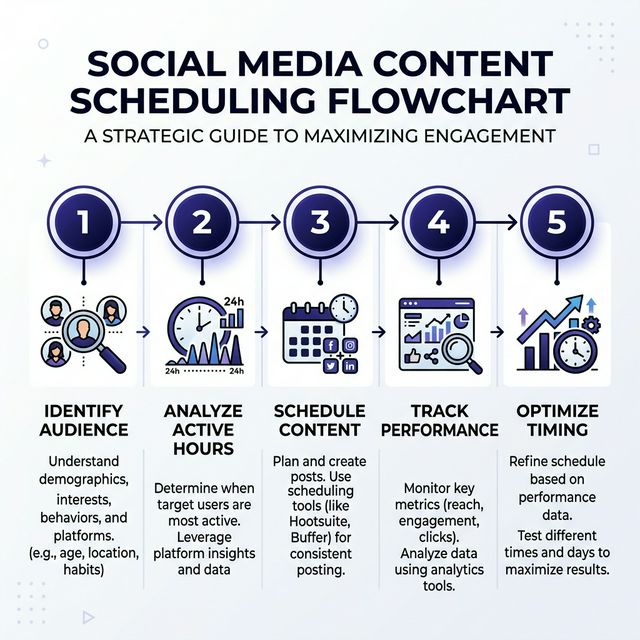
The Social Media Timing Flowchart
Follow this five-step process to ensure your content hits the audience at the perfect moment:
Why Most Creators Still Fail at Timing
Even with access to data, most creators still struggle because they:
- Guess their audience's time zones.
- Follow generic, outdated "best time" charts.
- Ignore their own specific channel analytics.
AI vs Manual Posting: What’s Better?
Manual posting is time-consuming, inconsistent, and prone to human error. AI-based posting is data-driven, automated, and optimized for reach based on real-time metrics.
Tools to Find the Best Posting Time
While YouTube Analytics and Instagram Insights are great starting points, they require manual checking and scheduling.
How Uploadkar Automates Perfect Timing
Instead of manually guessing, Uploadkar uses AI to analyze your specific audience's behavior across multiple platforms. It detects the literal "minute-by-minute" best time for your content and schedules it automatically.
The Uploadkar Advantage
Just say: "Upload this video tomorrow"
Uploadkar will handle the rest:
- Picks the absolute best time for engagement.
- Optimizes metadata for the specific platform.
- Tracks performance to improve the next post's timing.
Final Strategy (Step-by-Step)
- Understand your specific audience demographics.
- Post 30-60 minutes before peak hours.
- Test different timing windows over a 30-day period.
- Track engagement spikes in your analytics.
- Use an AI system like Uploadkar to automate the optimization.
Automate Your Growth
Stop guessing. Start growing. Let Uploadkar AI handle your timing while you handle the creation.
Try Uploadkar Early Access