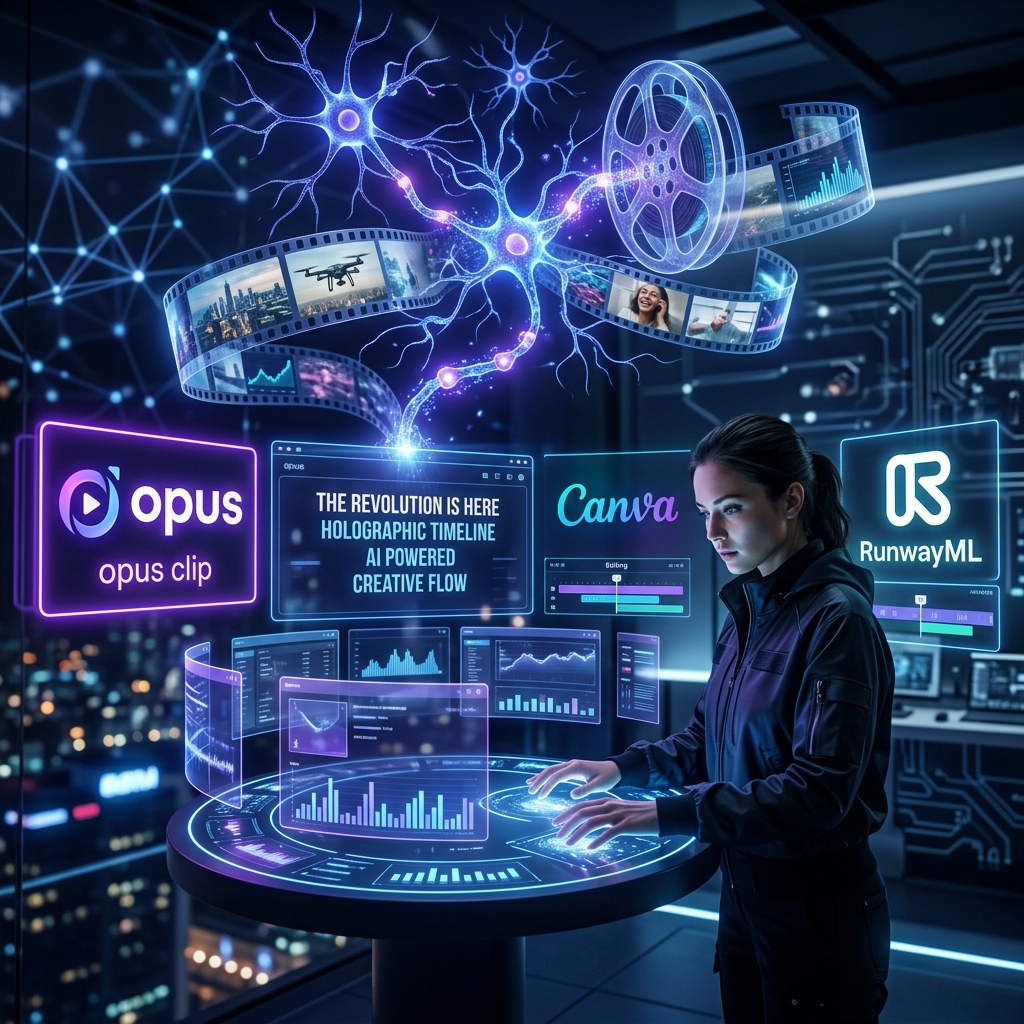
Video editing used to be one of the most time-consuming parts of content creation. Hours spent cutting clips, manual subtitling, hunting for highlights, and syncing audio. It was a grind.
But in 2026, the game has fundamentally changed. AI has turned editing from a manual labor task into a system-driven process. Creators are no longer "editing" in the traditional sense; they are directing AI-powered workflows.
How AI Video Editors Actually Work
AI video editors aren't just single "magic" tools. They are sophisticated ecosystems where multiple AI systems work in harmony.
1. Speech Recognition
Converts video speech to text instantly, enabling text-based editing, auto-subtitles, and searchable content libraries.
2. Smart Cutting
AI analyzes pauses, tone changes, and transitions to automatically remove silence and "filler" words like 'um' and 'ah'.
3. Highlight Detection
The "viral brain" that detects emotional spikes and key phrases to automatically create high-engagement short-form clips.
4. Visual Enhancement
Automatically improves color grading, adds relevant B-roll, and applies smooth transitions based on the content's mood.
The Core Technologies Behind AI Editing
This revolution is powered by four primary technology pillars:
- Speech AI: Beyond transcription, it understands context and emphasis.
- Computer Vision: "Sees" what is happening in the frame to detect scenes.
- Generative AI: Creates new frames, backgrounds, or even entire video segments from text.
- Automation Systems: Chains these technologies together into a seamless pipeline.
AI Video Editing Workflow (2026 System)
This is the blueprint used by the most successful modern creators to reduce editing time from 5 hours to under 5 minutes.
Record Master Video
AI Speech-to-Text & Diarization
AI Clip & Highlight Detection
Auto Editing (Cuts + Dynamic Captions)
Visual Enhancement (B-Roll + Grading)
Multi-Platform Publishing
Feedback & Retesting Loop
Why AI Video Editing Is Exploding in 2026
The shift isn't just about convenience—it's about survival in the creator economy. Here's why:
Pure Speed
What used to take 5 hours now takes 5 minutes of automated processing.
Unlimited Scale
Create 10–20 high-quality clips per day without burnout or hiring a large team.
Data-Backed Edits
AI chooses cuts based on engagement patterns, not just creative hunches.
Best AI Video Editors in 2026
1. Opus Clip — Best for Viral Shorts
If you're a YouTuber or podcaster looking to grow on TikTok and Reels, Opus Clip is the tool. It automatically finds the most "hooky" parts of your long-form video and turns them into perfectly formatted, captioned shorts.
2. Canva — Best All-in-One Editor
Canva has evolved into a powerhouse for marketers. Their "Magic Suite" includes text-to-video generation and a drag-and-drop editor that makes professional-grade video design accessible to absolute beginners.
3. Runway ML — Best for AI Generation
For filmmakers and creative professionals, Runway is the frontier. With generative AI that can create videos from thin air (text-to-video) and sophisticated VFX tools, it's the industry standard for next-gen creation.
Comparison: The Top AI Video Editors
| Tool | Best For | Ease of Use | Power |
|---|---|---|---|
| Opus Clip | Viral shorts | ⭐⭐⭐⭐ | ⭐⭐⭐⭐ |
| Canva | All-in-one design | ⭐⭐⭐⭐⭐ | ⭐⭐⭐ |
| Runway ML | AI Generation & VFX | ⭐⭐⭐ | ⭐⭐⭐⭐⭐ |
How to Build Your AI Video System
Smart creators don't just use one tool—they build a content engine. Here is a winning stack for 2026:
- Phase 1 (Creation): Use Runway ML to generate unique visuals or Canva for rapid prototyping.
- Phase 2 (Distribution): Feed your long videos into Opus Clip to automatically find and generate short-form clips.
- Phase 3 (Optimization): Use Uploadkar to analyze which of those clips will actually perform.
Where Uploadkar Fits
Once your AI video is rendered, the most important question remains: Will it actually work?
This is the gap that Uploadkar fills. While video editors focus on the "how," Uploadkar provides the intelligence. It analyzes your titles, thumbnails, and content structure to predict performance before you hit publish. From creation to intelligence—that's how you win in 2026.
Final Thoughts
AI video editing isn't just a new set of tools; it's a fundamental system shift. The creators who succeed in 2026 are those who stop editing manually and start building AI-powered workflows that allow them to focus on what matters: Great storytelling and strategic growth.
Ready to Upgrade Your Creative System?
Don't just create—create with intelligence. Combine the power of AI video tools with Uploadkar's performance prediction.
Start Building for Free →